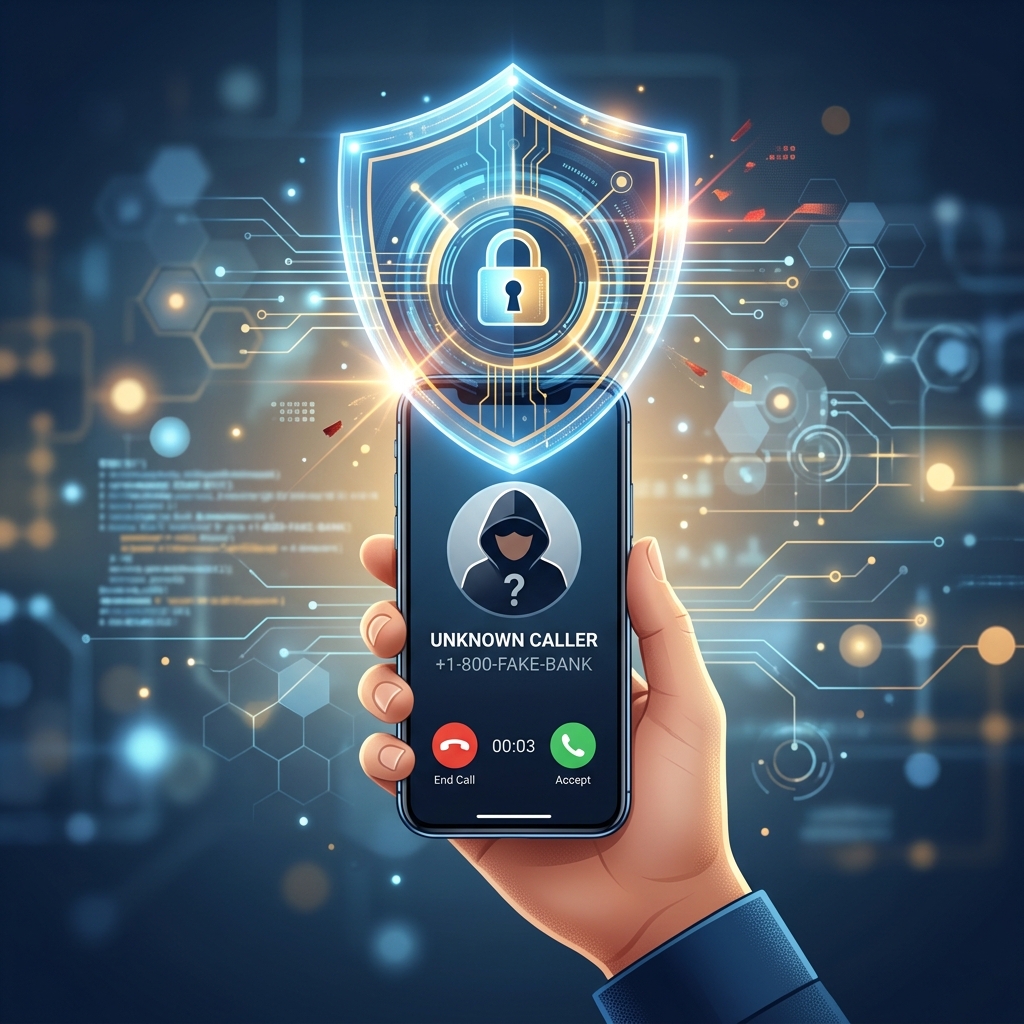
Is That Really Your Bank Calling? How to Spot a Fake Bank Phone Call
You are sitting down for dinner when your mobile phone rings. You glance at the screen, and the Caller ID clearly displays the name of your bank. You answer, and a polite, professional-sounding voice tells you there has been suspicious activity on your account.
Panic sets in. They say they need to verify your identity to freeze the fraudulent charges immediately. It sounds completely real. But is it?
This is one of the most common and effective tricks used by criminals today. If you have ever wondered what is vishing scam (short for "voice phishing"), this is exactly it. It catches thousands of smart, careful people off guard every single day.
The Golden Rule of Bank Phone Calls
Your bank will never call you out of the blue and ask for your PIN, your full password, or the one-time security code sent to your mobile phone. If someone asks for these details on the phone, you are dealing with a scammer. Hang up immediately.
But the Caller ID said it was my bank!
This is the most terrifying part of these phone scams. Scammers use cheap online software to make a fake phone number appear on your screen. This technology is called "spoofing." They can make your phone display the name of your bank, the police, or even the exact 1-800 number printed on the back of your debit card.
Because of this technology, you can no longer completely trust your Caller ID. If you find yourself staring at your screen wondering is this phone number a scam?, the safest assumption is that it might be, regardless of what the name says.
3 Warning Signs of a Fake Bank Call
Even though the scammers sound professional, they almost always follow a specific script. Listen for these three massive red flags:
1. The "Test Transaction" Request
They will claim they need your help to "catch the hacker" or reverse a charge by having you send money to a "safe account" via a wire transfer, Zelle, or CashApp. A real bank will never ask you to move your own money to protect it.
2. Asking for a Verification Code
They will say, "I just texted you a 6-digit code to verify your identity. Please read it back to me." In reality, they are trying to log into your account on their own computer, and that text is the bank's security system trying to stop them. If you read the code to them, you are letting them in.
3. Refusing to Let You Hang Up
If you say you want to call the bank back yourself, a scammer will try to keep you on the line. They might say, "If you hang up, the fraudulent charges will go through permanently." A real bank employee will always encourage you to call the official number to feel safe.
Bank Scam Phone Call: What to Do Next
If you suspect you are on a fake call, take a deep breath and follow these exact steps to protect yourself:
- Hang up immediately: Do not worry about being polite. Just end the call. You do not need to explain yourself to a criminal.
- Find the real number: Turn your debit or credit card over and look for the customer service number printed on the back. You can also find it on a recent paper statement.
- Call them yourself: Dial that official number. When the automated system asks why you are calling, say "Fraud." When you reach an agent, explain that you received a suspicious call and want to check if your account is secure.
What If I Already Gave Them Information?
First, do not be hard on yourself. These criminals are highly trained manipulators. If you realize you have handed over your bank details or a security code during a bank scam phone call what to do next is critical, but you must act fast.
Grab a different phone if possible, look up your bank's real fraud department number, and call them immediately. Tell them your account has been compromised. They can freeze your accounts, cancel your current debit cards, and secure your money before the scammers have a chance to move it.
How to Block Scam Calls Before They Reach You
While you cannot stop every scammer in the world, you can drastically reduce the number of scam calls that make your phone ring. If you are wondering how to block scam calls, start with your mobile phone provider. Most major carriers offer free spam-blocking apps that you can download directly from your app store.
Additionally, both iPhones and Android phones have built-in settings to "Silence Unknown Callers." While this will send anyone not in your contacts list straight to voicemail, it is a highly effective way to ensure your phone only rings for people you actually know and trust.
Remember: You are always in control. If a call makes you uncomfortable, hanging up is the strongest, safest action you can take.